

- Dates
- 31 August – 2 September 2026
- Place
- Bangkok, Thailand
- Role
- Speaker
- Presentation
- The Role of Self-Efficacy as a Regulatory Mechanism for Airline Pilots and Instructors within Evidence-Based TrainingGiacomo Belloni and Fabrizio Interlandi

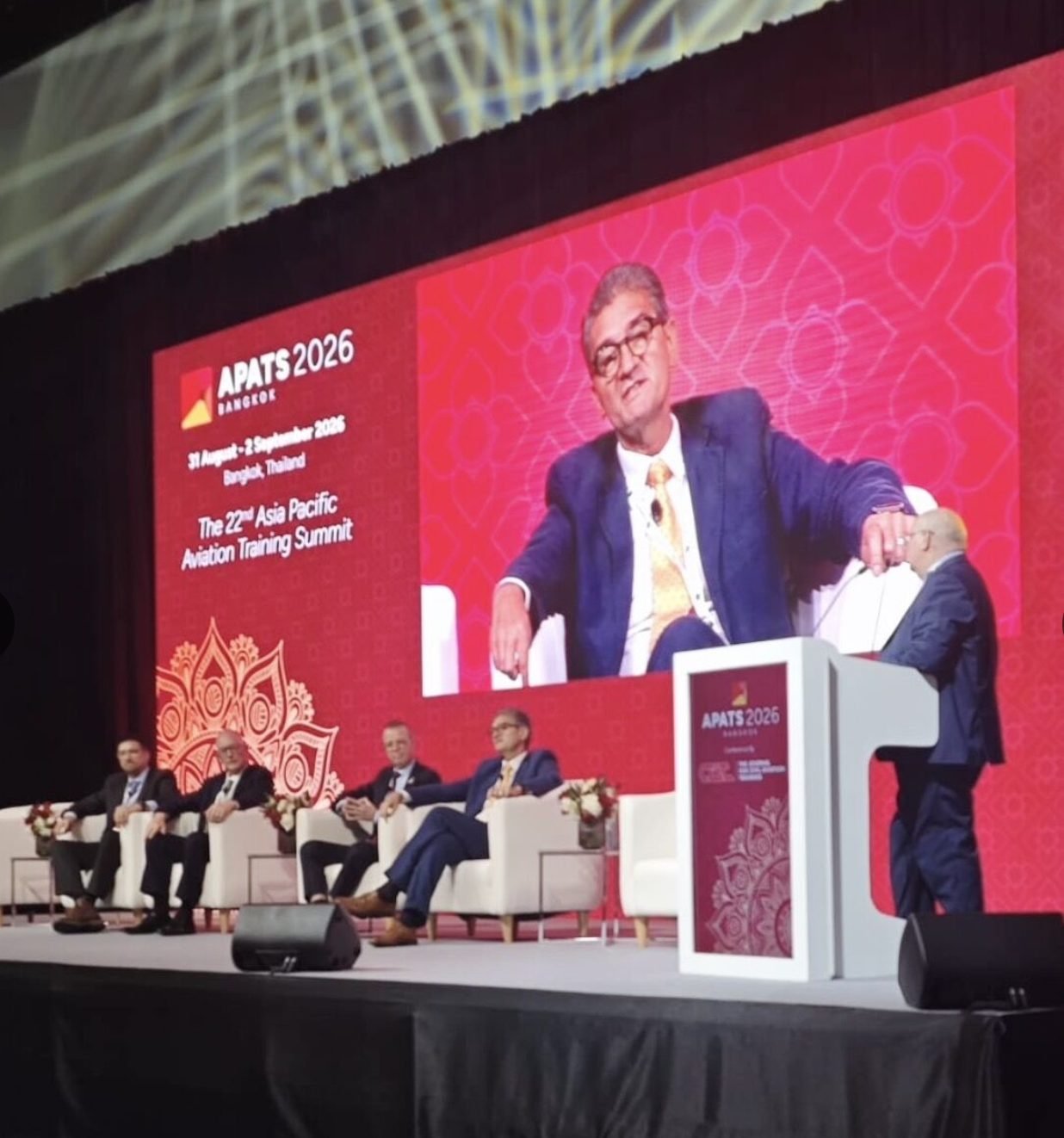
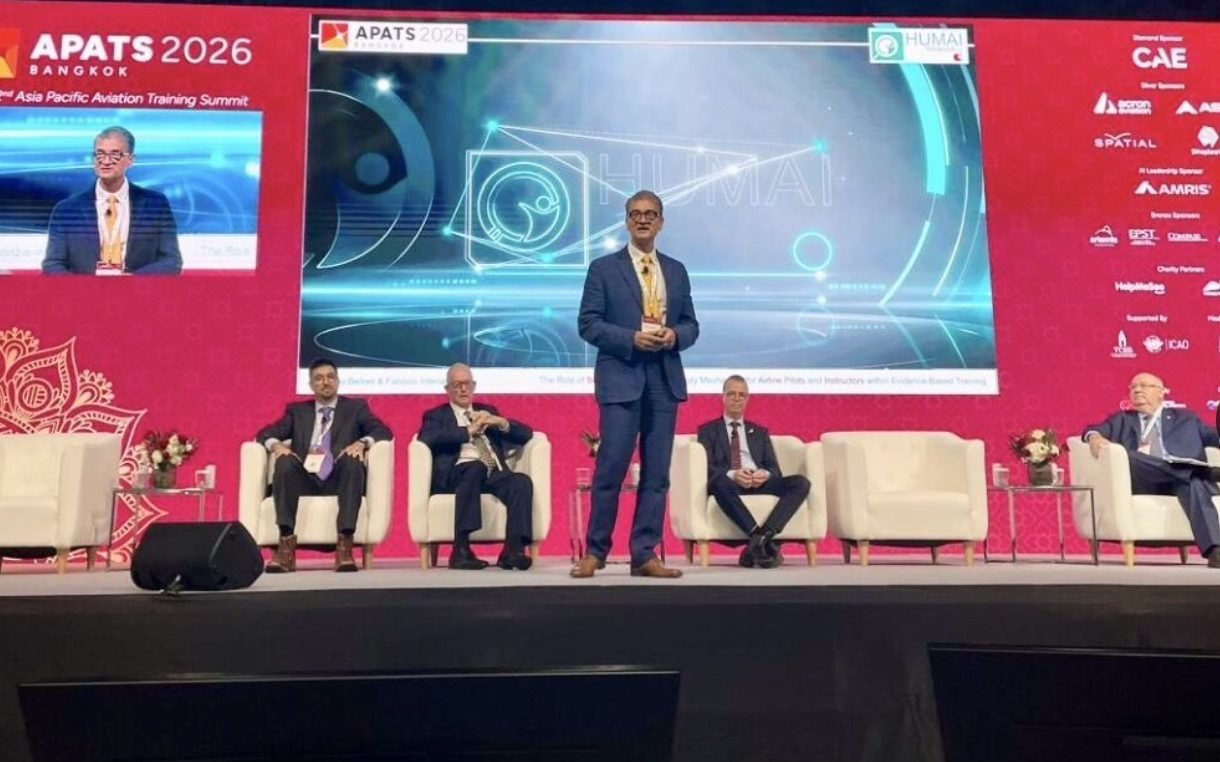


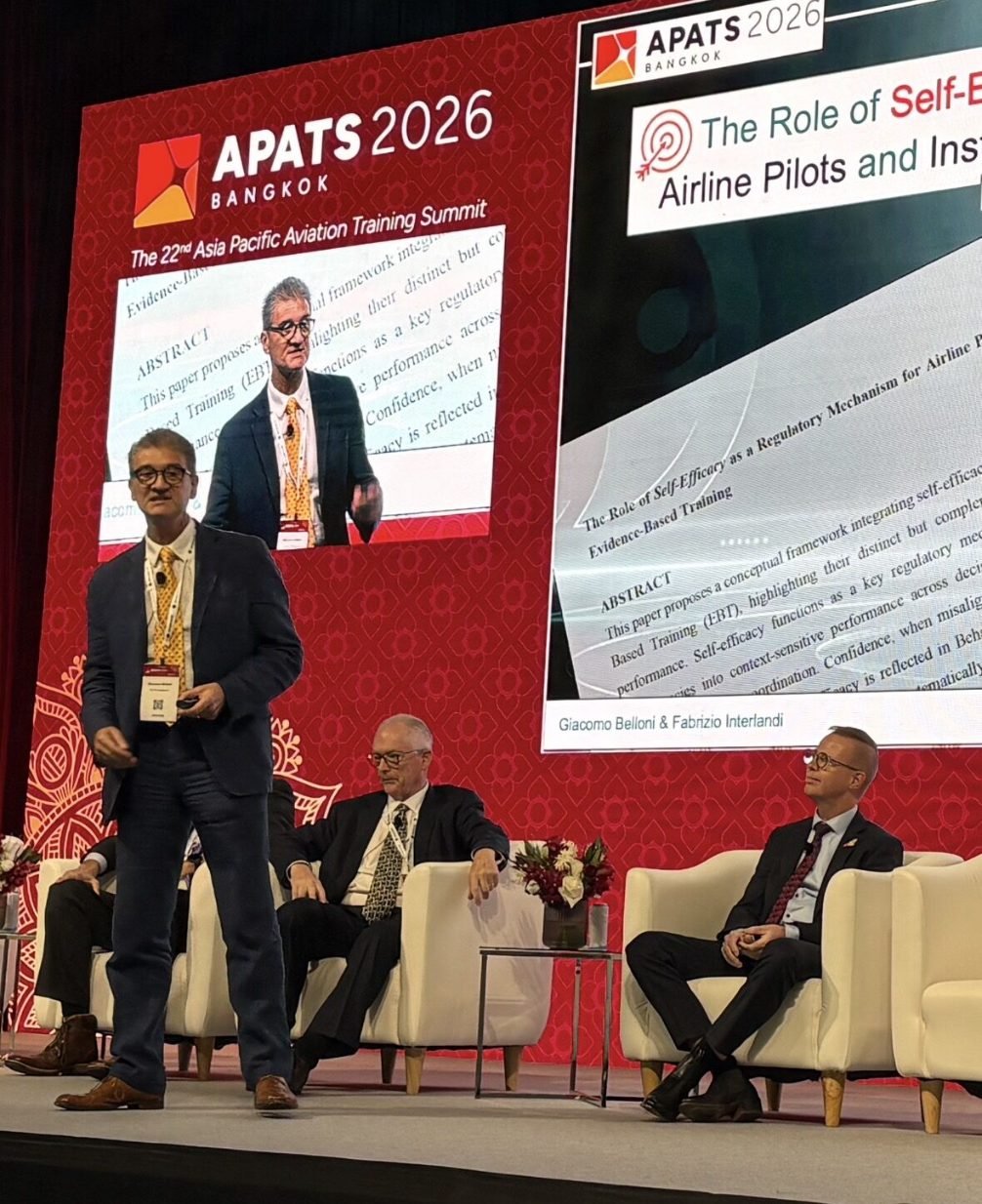

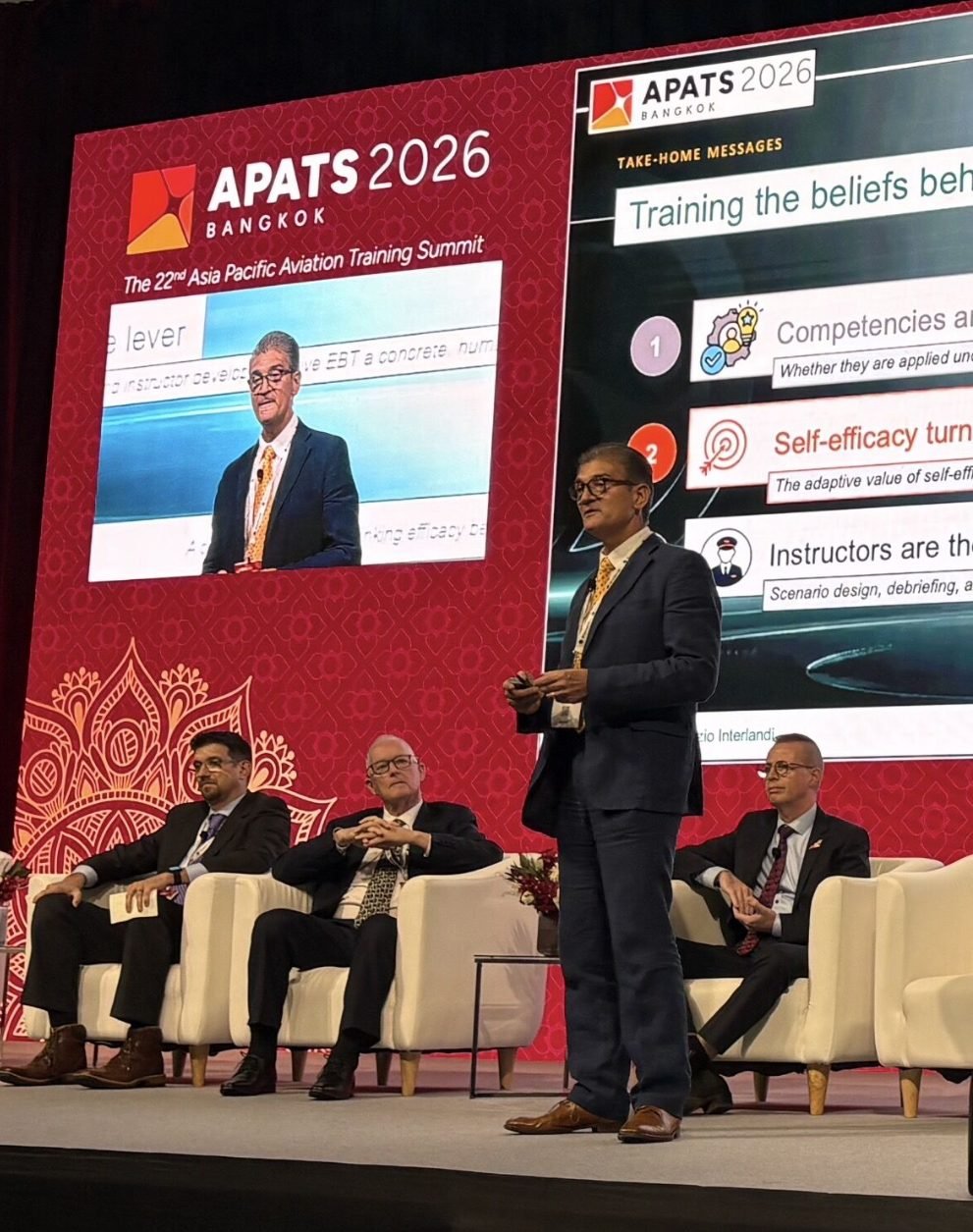

Each year the Asia Pacific Aviation Training Summit brings together the people who decide how pilots and crews are trained in one of the fastest-growing aviation regions in the world. Airline training managers sit alongside regulators, simulator manufacturers, instructors and researchers, and for three days the talk is about what actually works in the training centre and on the line. The 22nd edition was held in Bangkok from 31 August to 2 September 2026.
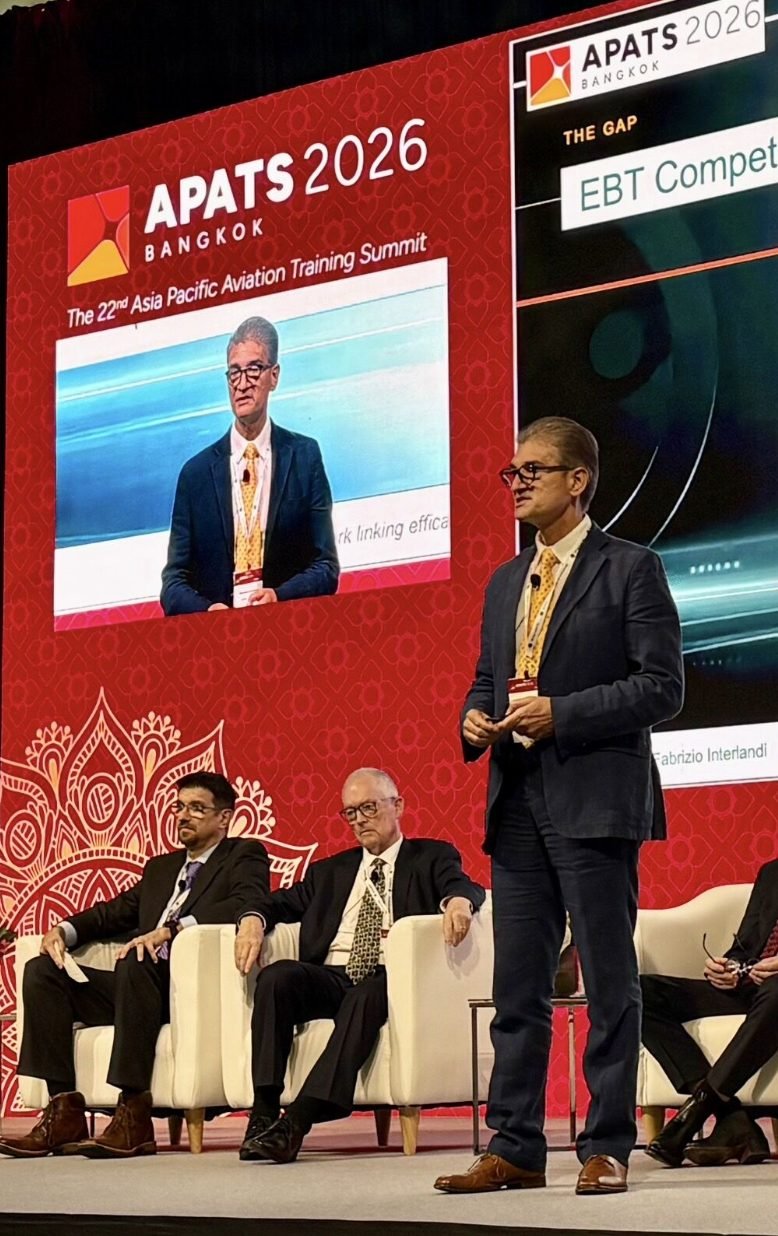
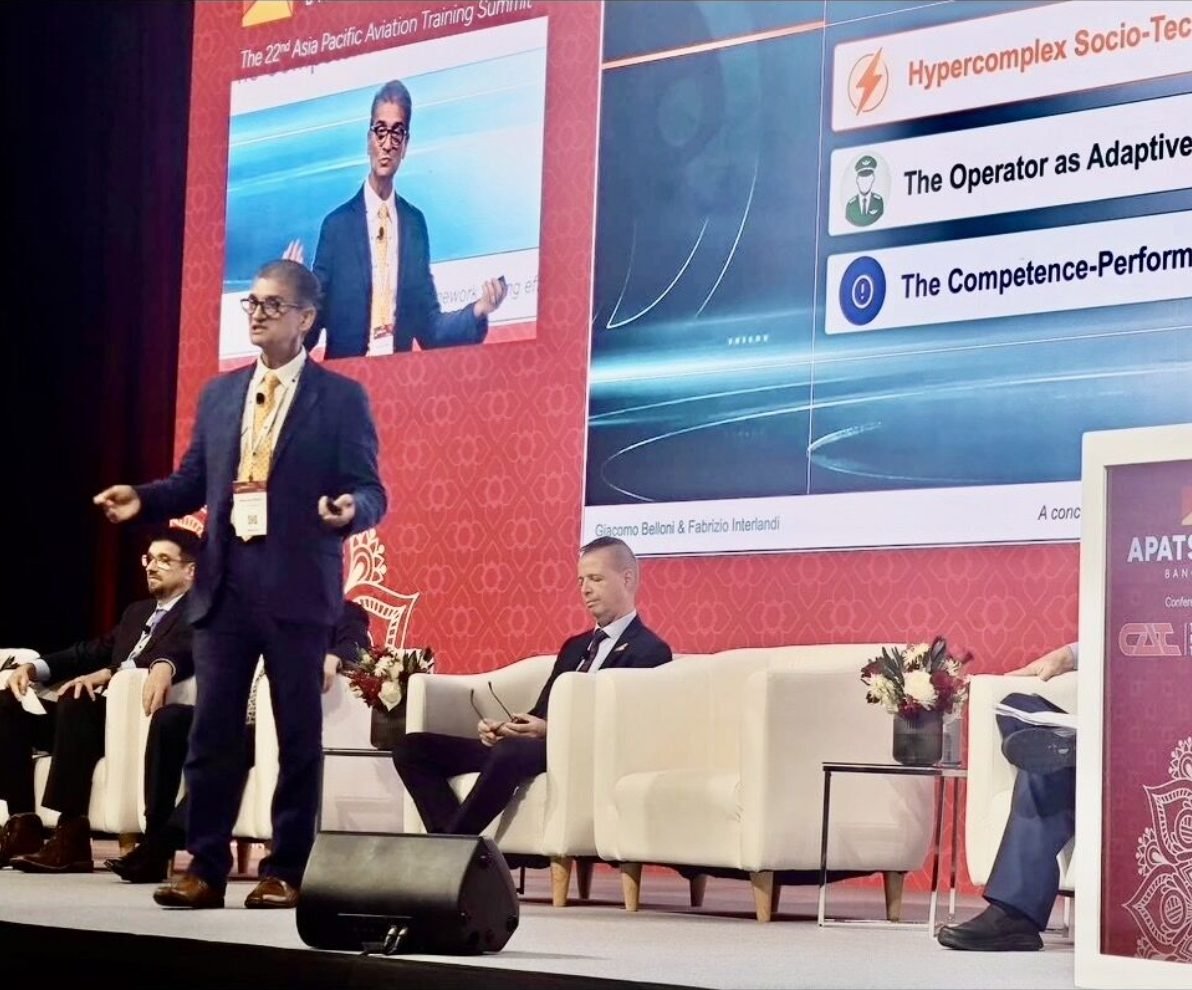
Captain Giacomo Belloni spoke on behalf of HUMAI Research during a panel on resilience and human performance. He presented our latest academic study, written with Captain Fabrizio Interlandi, on self-efficacy as a key construct that regulates how EBT competencies are expressed in real operational contexts.
The study starts from a gap that competency frameworks tend to leave open. Two pilots can show the same EBT competencies in training and still apply them very differently once the operation becomes demanding. Self-efficacy, a pilot’s belief in their own ability to handle a given situation, is one of the mechanisms that turns competencies into performance suited to the context, in decision-making, workload management and crew coordination. When that belief is well calibrated it supports performance. When it is misaligned with actual ability, confidence can erode vigilance or hold a pilot back.
The work also looks at the instructor’s role. Scenario design and debriefing can be used to develop well-calibrated efficacy beliefs on purpose, so that EBT trains the beliefs behind a performance as well as the performance itself.
Sharing this research with such an engaged and forward-thinking aviation community was a real reward. Our thanks go to the APATS organisers: the event ran flawlessly and offered the ideal setting for meaningful professional connections.